Mechanical Engineering

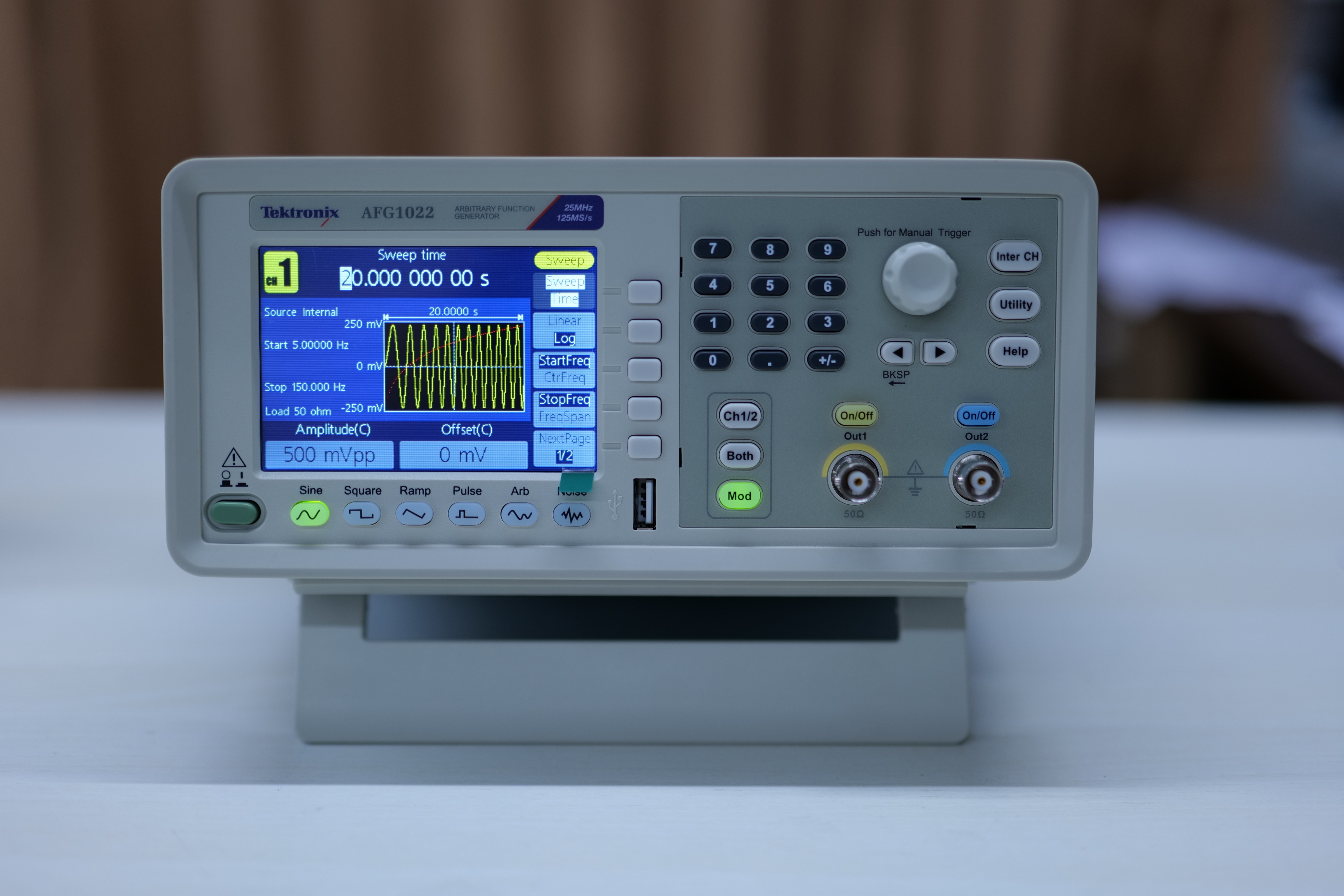
The Tektronix AFG1022 Arbitrary Function Generator is a precision signal source designed for generating a wide variety of electrical waveforms for testing and characterizing electronic circuits and systems. This dual-channel instrument features arbitrary waveform generation capability, standard waveform library including sine, square, triangle, and pulse signals, and frequency range suitable for diverse applications. The generator provides precise control of amplitude, frequency, phase, and offset parameters with high-resolution output. It incorporates modulation capabilities including AM, FM, and PWM for complex signal generation, along with sweep and burst modes for specialized testing requirements. The system enables stimulus generation for circuit testing, sensor simulation, and system characterization through flexible waveform synthesis. This versatile test equipment supports electronic design validation, component testing, and educational demonstrations, providing reliable signal generation essential for developing and testing electronic systems, evaluating circuit responses, and understanding signal processing concepts.

Location
Applied Mechanics Lab, Dr. APJ Kalam Block, Ground Floor, Right Wing
Faculty In-Charge
Contact Details
me-apm@iitpkd.ac.in

The Tektronix TBS2104B Digital Oscilloscope is a professional electronic test instrument designed for visualization and measurement of time-varying electrical signals in laboratory and field applications. This advanced 4-channel oscilloscope features high bandwidth, fast sampling rate, and deep memory depth for capturing complex waveforms. The instrument provides comprehensive measurement capabilities including voltage, frequency, rise time, and automated waveform parameter analysis. It incorporates large color display, intuitive user interface, and advanced triggering modes for capturing intermittent signals and specific waveform events. The oscilloscope enables debugging of electronic circuits, signal integrity analysis, and verification of system performance through detailed waveform examination. This essential electronic instrumentation supports research and development, quality control testing, and educational demonstrations in electronics, providing reliable measurement and visualization of electrical signals essential for circuit design validation, troubleshooting, and understanding electronic system behavior.

Location
Applied Mechanics Lab, Dr. APJ Kalam Block, Ground Floor, Right Wing
Faculty In-Charge
Contact Details
me-apm@iitpkd.ac.in

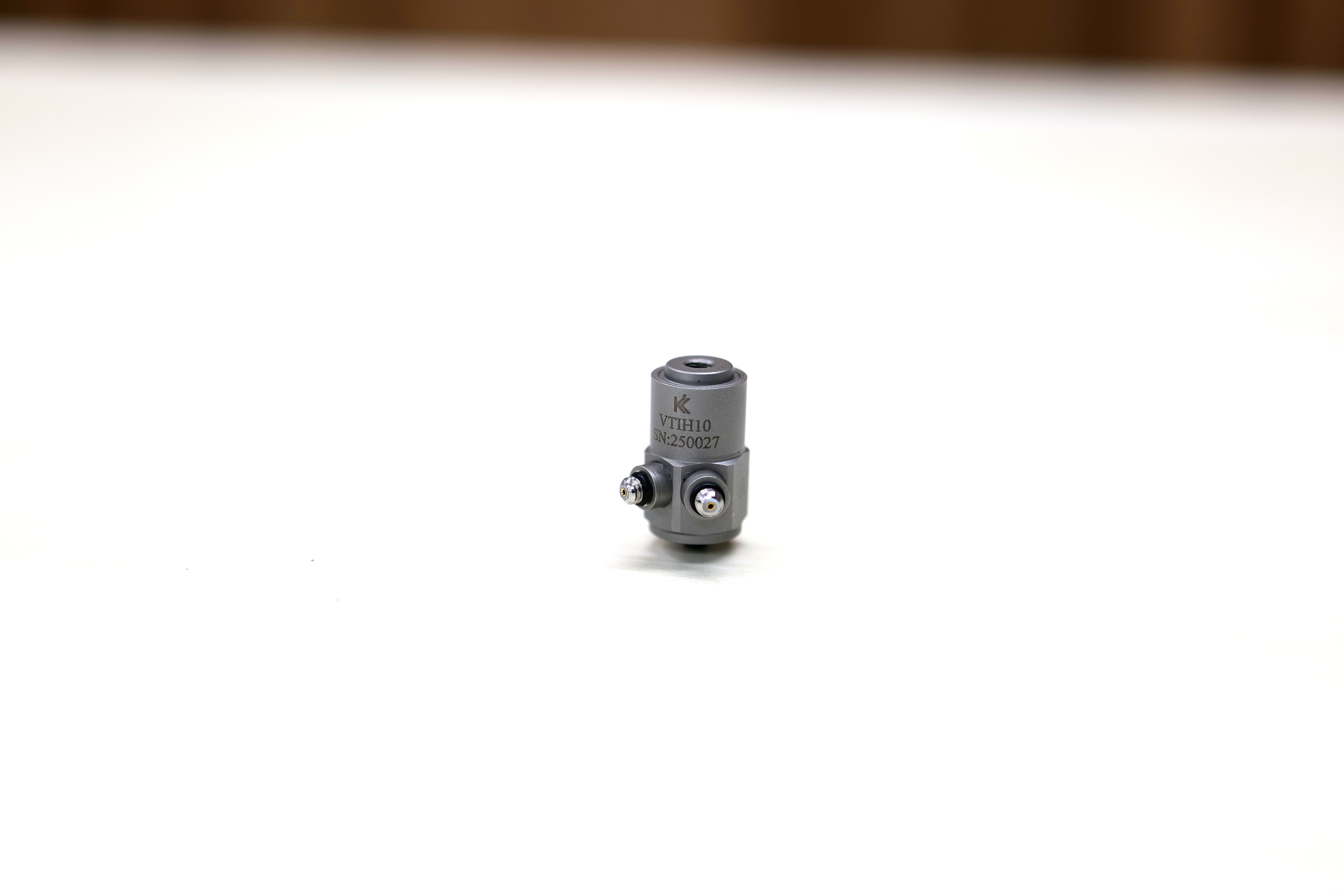
The KEMO VTIH10 Impedance Head is a sophisticated combination sensor designed for simultaneous measurement of force and acceleration during vibration testing and modal analysis experiments. This integrated transducer assembly features coaxial arrangement of force sensor and accelerometer in a single housing, ensuring accurate measurement of the force-to-acceleration ratio defining mechanical impedance. The impedance head enables direct frequency response function measurement, accurate modal testing without requiring separate force and motion sensors, and minimized phase errors through collocated sensing. It incorporates appropriate sensitivity balance between force and acceleration channels, threaded mounting for secure attachment, and ICP signal conditioning for simplified integration. This essential modal testing instrumentation provides accurate input-output measurement for experimental transfer function determination, supporting structural dynamics research, vibration analysis, and modal parameter extraction in applications requiring precise characterization of dynamic mechanical properties and frequency response characteristics.

Location
Applied Mechanics Lab, Dr. APJ Kalam Block, Ground Floor, Right Wing
Faculty In-Charge
Contact Details
me-apm@iitpkd.ac.in

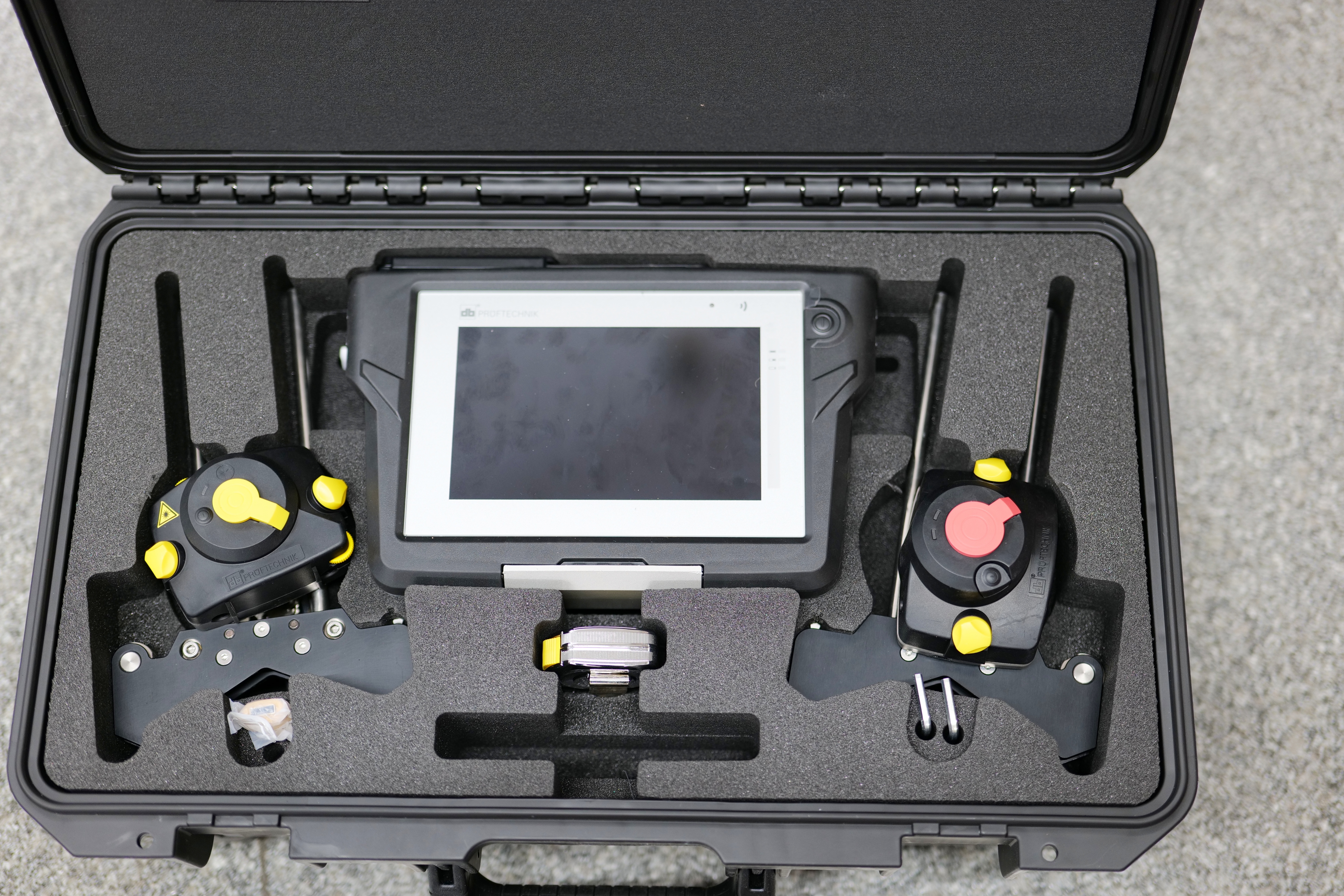
The Pruftechnik Optalign Touch is a precision laser-based shaft alignment system designed for accurate alignment of rotating machinery reducing vibration and extending equipment life. This advanced measurement system features laser transmitter and detector units, wireless communication, and intuitive touchscreen interface for guided alignment procedures. The equipment enables precise measurement of angular and parallel misalignment between coupled shafts, providing real-time correction values for achieving optimal alignment within specified tolerances. It incorporates measurement modes for various machine configurations, documentation capabilities for alignment records, and soft foot detection for foundation problems. The system dramatically reduces alignment time compared to traditional methods while improving accuracy and reducing measurement uncertainty. This professional alignment tool is essential for maintenance operations, installation procedures, and reliability programs where proper shaft alignment is critical for preventing premature bearing failures, reducing energy consumption, and minimizing vibration-related problems in rotating machinery installations.

Location
Applied Mechanics Lab, Dr. APJ Kalam Block, Ground Floor, Right Wing
Faculty In-Charge
Contact Details
me-apm@iitpkd.ac.in

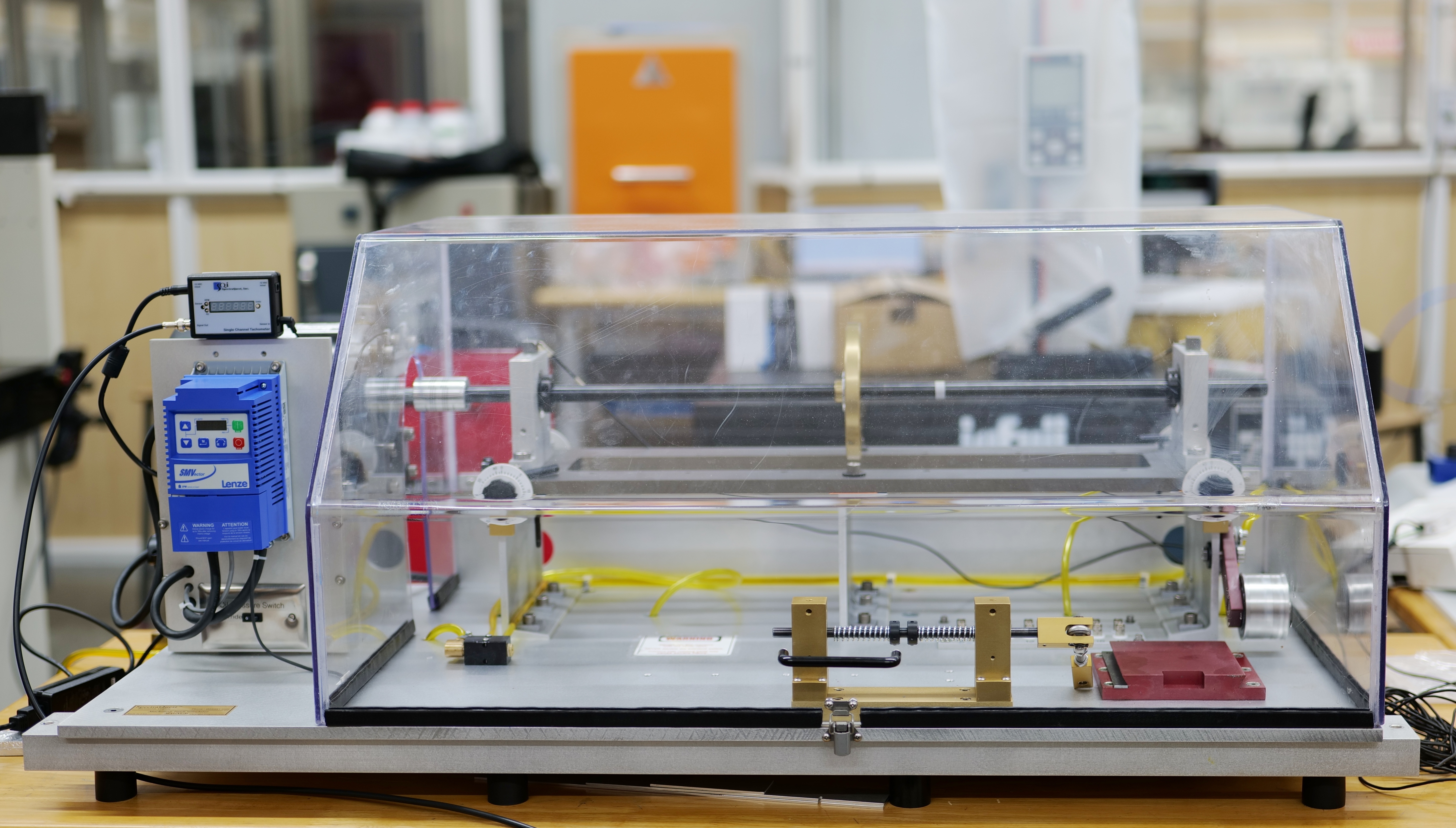
The Rotating Machinery Fault Simulator is a comprehensive training and research system designed for investigating vibration signatures associated with common machinery faults and practicing diagnostic procedures. This educational apparatus features a rotating assembly with provisions for introducing controlled fault conditions including unbalance, misalignment, bearing defects, shaft bends, and looseness. The system incorporates variable speed drive, vibration sensors at multiple locations, and data acquisition capability for comprehensive vibration analysis. It enables hands-on learning of condition monitoring techniques, frequency domain analysis, and diagnostic decision-making for machinery health assessment. The simulator facilitates understanding of fault characteristic frequencies, vibration pattern recognition, and correlation between physical defects and measured vibration signatures. This essential training equipment bridges theoretical knowledge and practical diagnostic skills, preparing engineers and technicians for industrial vibration analysis and predictive maintenance activities while demonstrating the effectiveness of condition-based monitoring strategies.

Location
Applied Mechanics Lab, Dr. APJ Kalam Block, Ground Floor, Right Wing
Faculty In-Charge
Contact Details
me-apm@iitpkd.ac.in

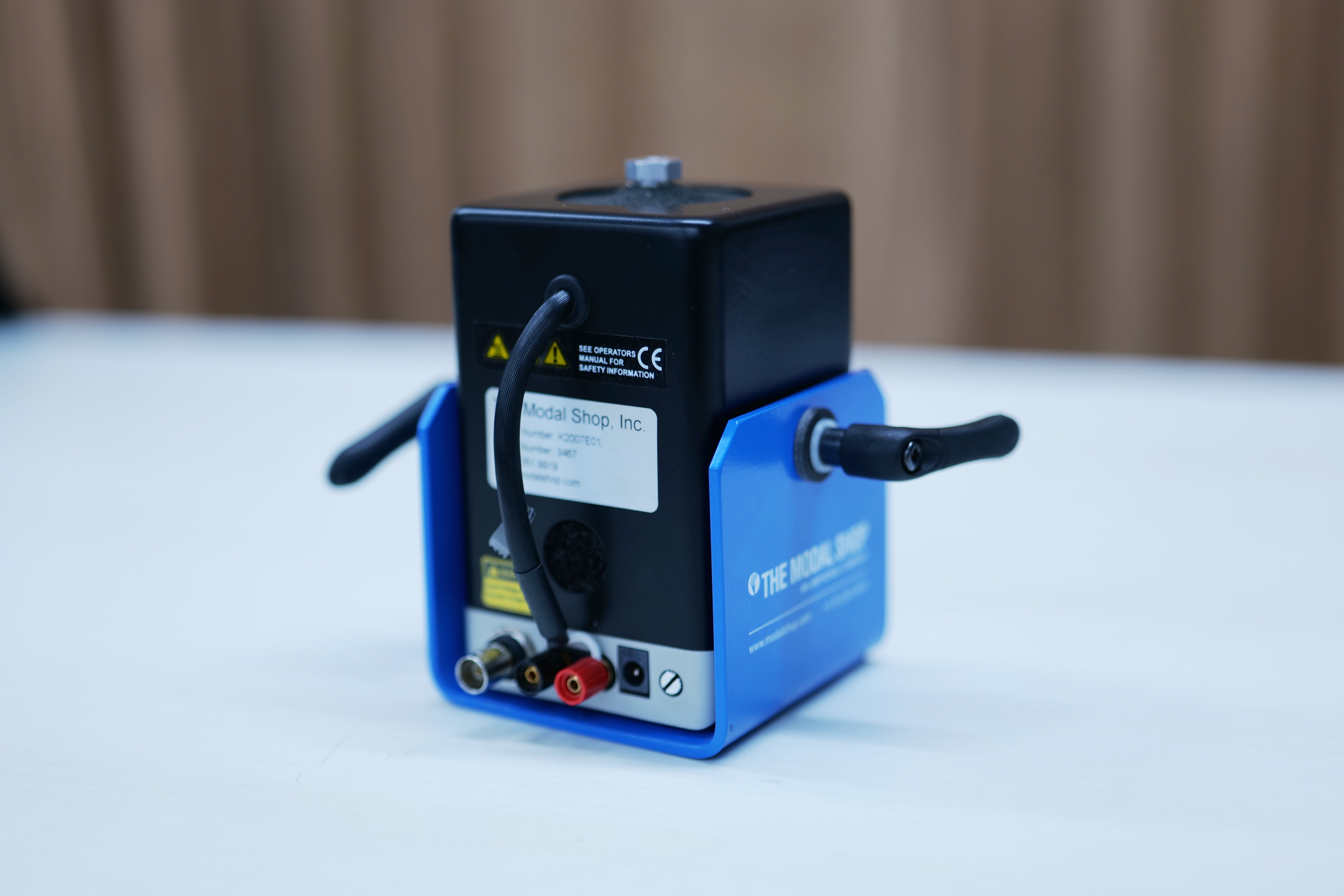
The Modal Shop K2007E01 is a specialized electrodynamic excitation system specifically designed for experimental modal analysis and frequency response testing of lightweight structures. This precision modal shaker features permanent magnet design, integrated power amplifier eliminating external amplification requirements, and compact configuration suitable for laboratory and field testing. The system provides controlled sinusoidal or random excitation with appropriate force output for exciting structural modes without introducing excessive nonlinearity or overloading test specimens. It incorporates impedance head interface for force measurement, mounting provisions for versatile attachment to test structures, and frequency response optimized for modal testing applications. The integrated design simplifies test setup and enhances portability compared to traditional shaker systems requiring separate amplifiers. This specialized modal testing equipment supports structural dynamics research, product development, and educational demonstrations where accurate controlled excitation is required for determining natural frequencies, damping ratios, and mode shapes through experimental modal analysis procedures.

Location
Applied Mechanics Lab, Dr. APJ Kalam Block, Ground Floor, Right Wing
Faculty In-Charge
Contact Details
me-apm@iitpkd.ac.in

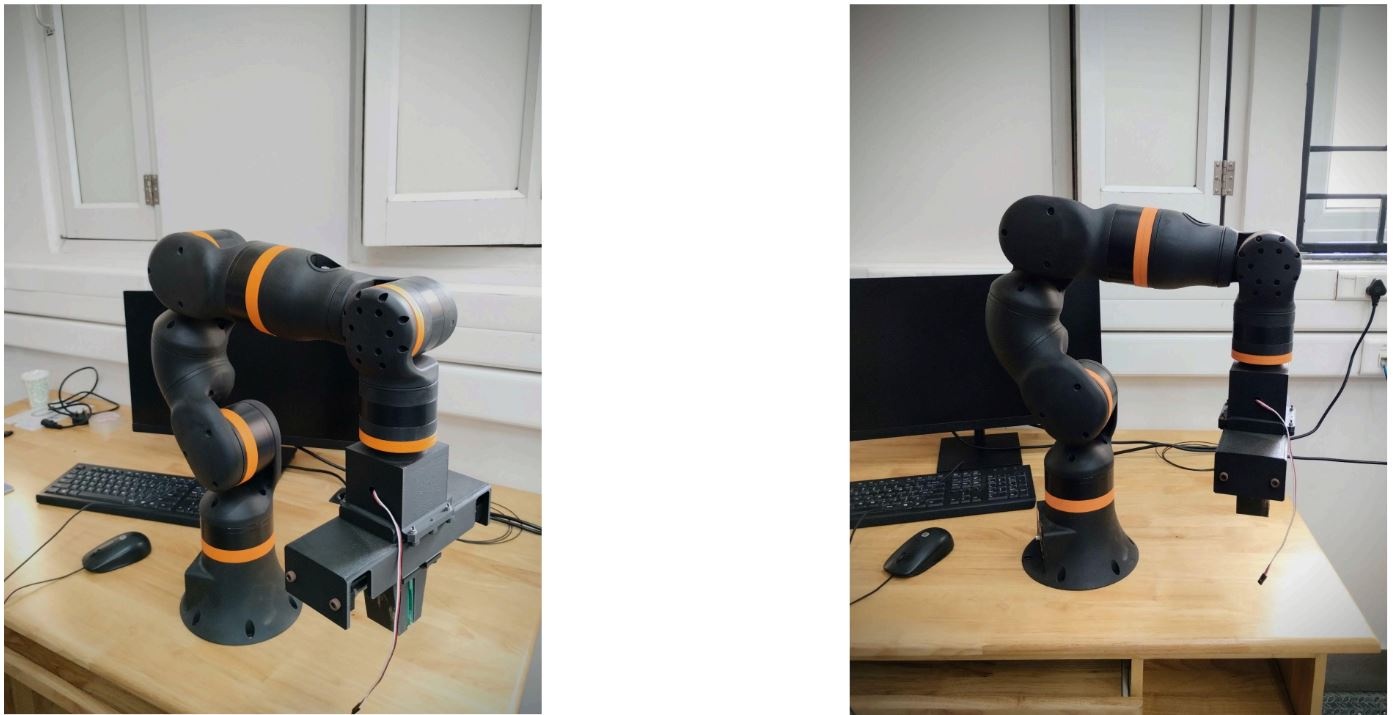
Igus ReBel is a lightweight, cost-effective collaborative robotic manipulator designed for industrial automation. The name ReBeL stands for Robotic embedded-BLDC & electronics Link, reflecting the integrated electronic design and brushless drive system. This manipulator is designed with industrial plastic, making it lightweight. This manipulator has an integrated controller and can be made to operate as a standalone system. The manipulator can be programmed and operated using the vendor-supplied Igus Robot Control (iRC) software, which provides a user-friendly interface for motion control and task execution. Additionally, the system supports integration with open-source robotic frameworks such as ROS, making it suitable for research, education, and advanced automation workflows.

The following table gives the specifications of the robot.

Maximum Payload 2 Kg
Maximum Reach 664 mm
Weight 8.2 kg
No. of DOF 6
Repeatability ±1mm

Location
Center for robotics
B03,Room number 010
Sahyadri campus
Faculty In-Charge
Contact Details
me-apm@iitpkd.ac.in

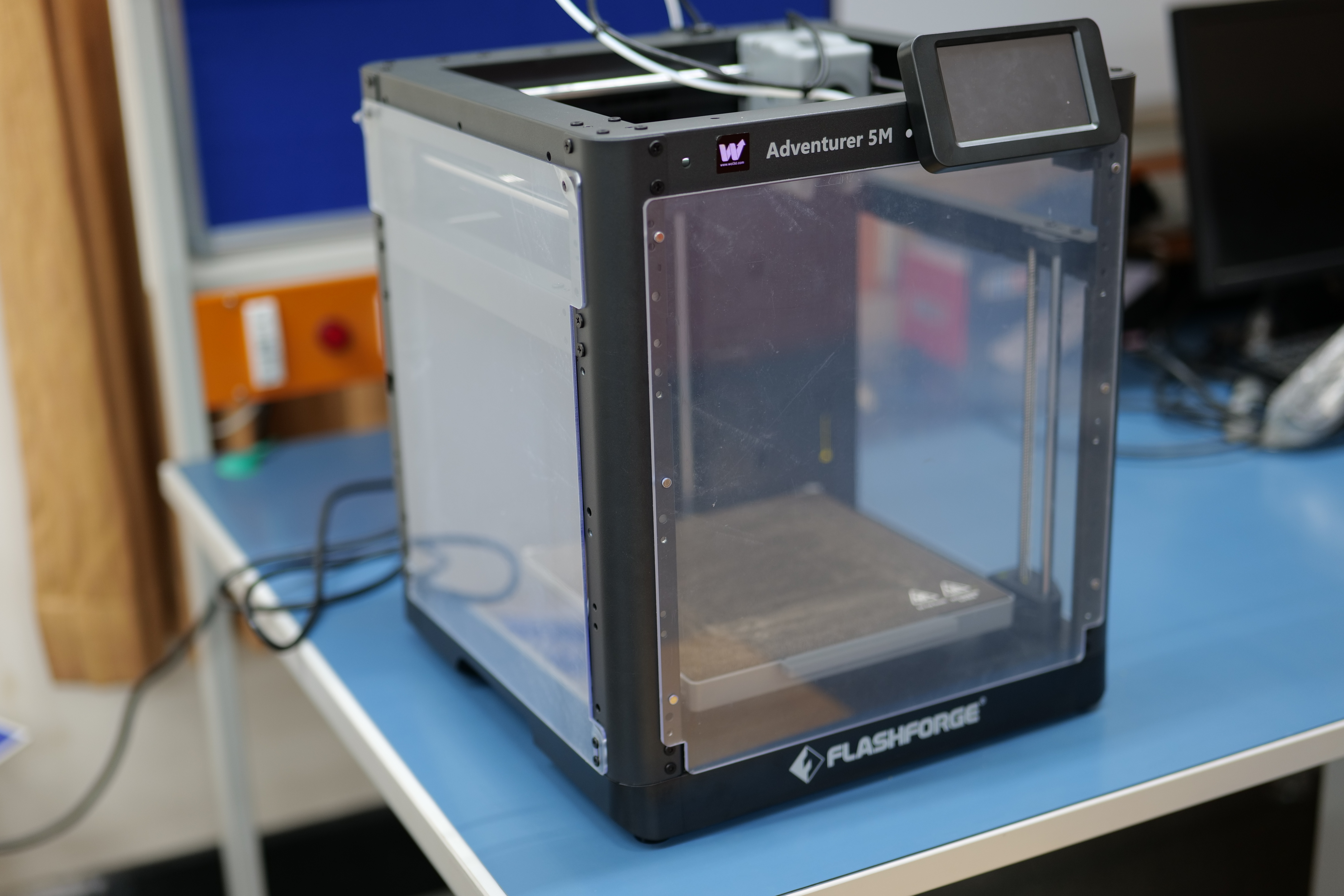
The Flashforge Adventurer 5M is a user-friendly fused deposition modeling 3D printer designed for rapid prototyping, educational applications, and design iteration in engineering and research environments. This versatile additive manufacturing system features enclosed build chamber, automatic bed leveling, and touch screen interface for simplified operation. The printer supports various thermoplastic materials including PLA, ABS, and PETG, offering flexibility in material selection for different application requirements. It incorporates quick-change nozzle system, filament detection, and resume printing functionality for reliable operation. The system enables rapid production of functional prototypes, custom fixtures, and conceptual models supporting design verification and testing procedures. This accessible 3D printing technology democratizes rapid prototyping capabilities, providing engineering teams and educational institutions with practical additive manufacturing tools for translating digital designs into physical parts, facilitating iterative design processes and hands-on learning in modern manufacturing technologies.

Location
Applied Mechanics Lab, Dr. APJ Kalam Block, Ground Floor, Right Wing
Faculty In-Charge
Contact Details
me-apm@iitpkd.ac.in

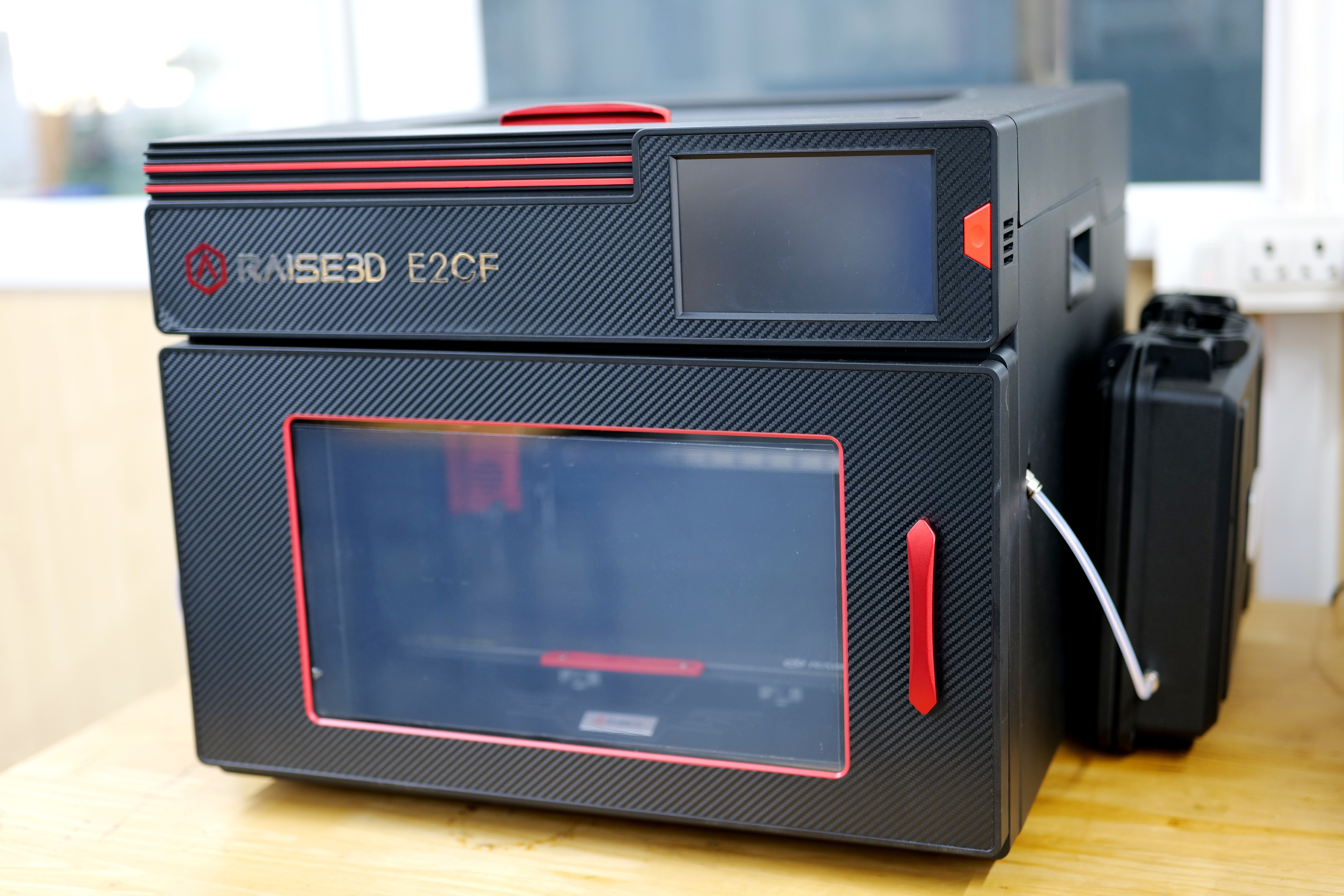
The Raise3D E2CF is an advanced composite-capable 3D printer designed for manufacturing high-performance parts using continuous fiber-reinforced thermoplastic materials. This industrial-grade additive manufacturing system features dual independent extruders, heated build chamber, and specialized print head for processing carbon fiber, fiberglass, and kevlar-reinforced filaments. The printer enables production of structural components with significantly enhanced mechanical properties compared to standard FDM parts through continuous fiber reinforcement. It incorporates precision motion control, automatic bed leveling, and comprehensive slicing software for optimizing fiber orientation and part strength. The system provides large build volume, enclosed printing environment for temperature control, and reliability features for unattended operation. This advanced manufacturing equipment supports aerospace, automotive, and research applications requiring lightweight, high-strength components, enabling rapid prototyping and small-series production of composite structures with mechanical performance approaching traditionally manufactured composite parts.

Location
Applied Mechanics Lab, Dr. APJ Kalam Block, Ground Floor, Right Wing
Faculty In-Charge
Contact Details
me-apm@iitpkd.ac.in

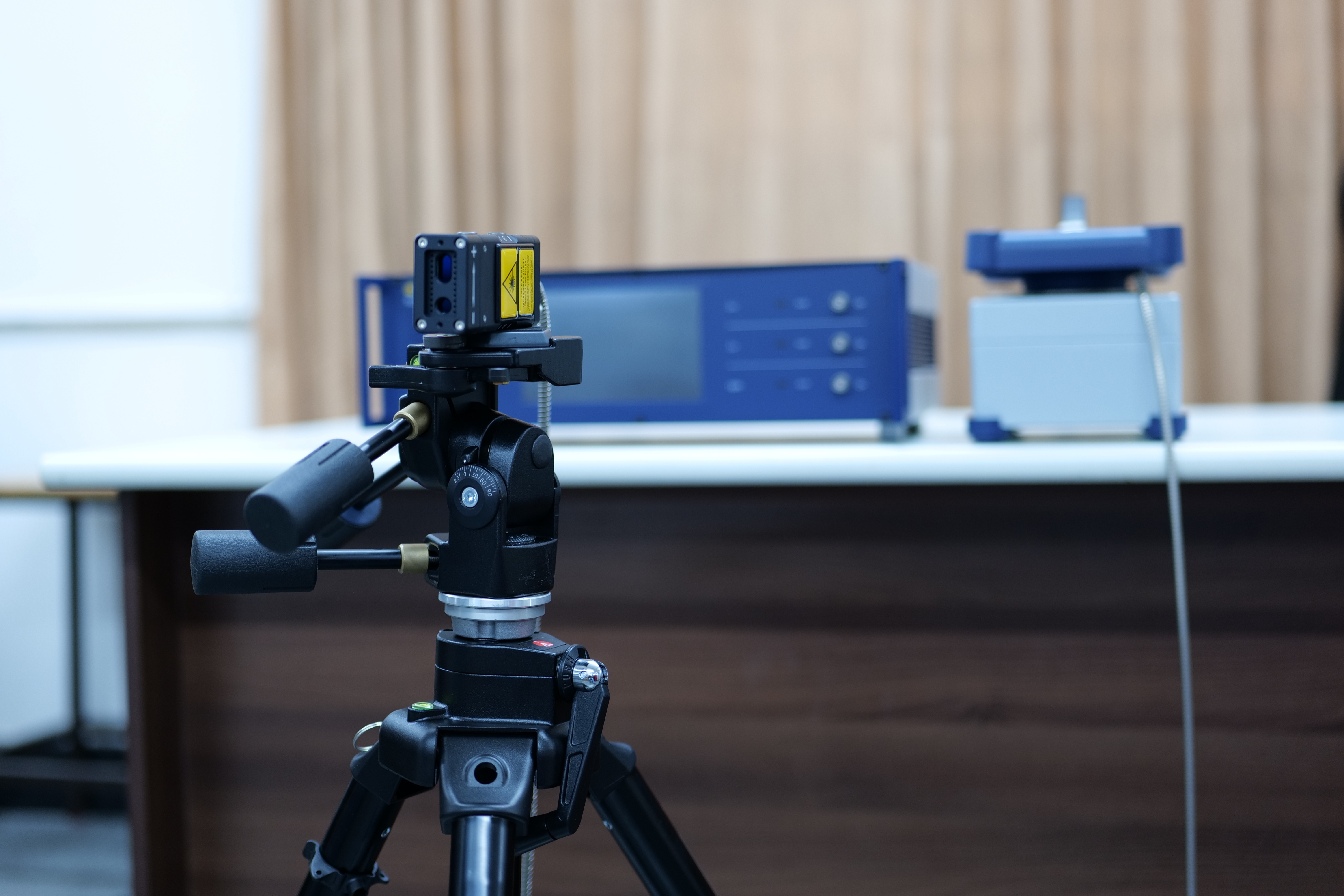
The Polytec RLV-5500 Laser Vibrometer is a sophisticated non-contact vibration measurement system utilizing laser Doppler technology for precise velocity and displacement measurements on vibrating structures. This advanced optical instrument features laser interferometry for detecting surface motion, high-frequency response capability, and sub-nanometer displacement resolution. The system enables vibration measurement on rotating components, hot surfaces, and delicate structures where contact sensors would alter dynamic behavior or are impractical to install. It incorporates automatic focusing, velocity decoder signal processing, and comprehensive measurement range covering micro-vibrations to high-amplitude oscillations. The vibrometer facilitates experimental modal analysis, machinery diagnostics, and acoustic source identification through spatially precise non-contact measurements. This professional laser-based instrumentation represents state-of-the-art technology for vibration analysis, supporting advanced research in structural dynamics, noise source identification, and condition monitoring applications where traditional contact sensors cannot provide the required measurement capabilities.

Location
Applied Mechanics Lab, Dr. APJ Kalam Block, Ground Floor, Right Wing
Faculty In-Charge
Contact Details
me-apm@iitpkd.ac.in
Subscribe to Mechanical Engineering